
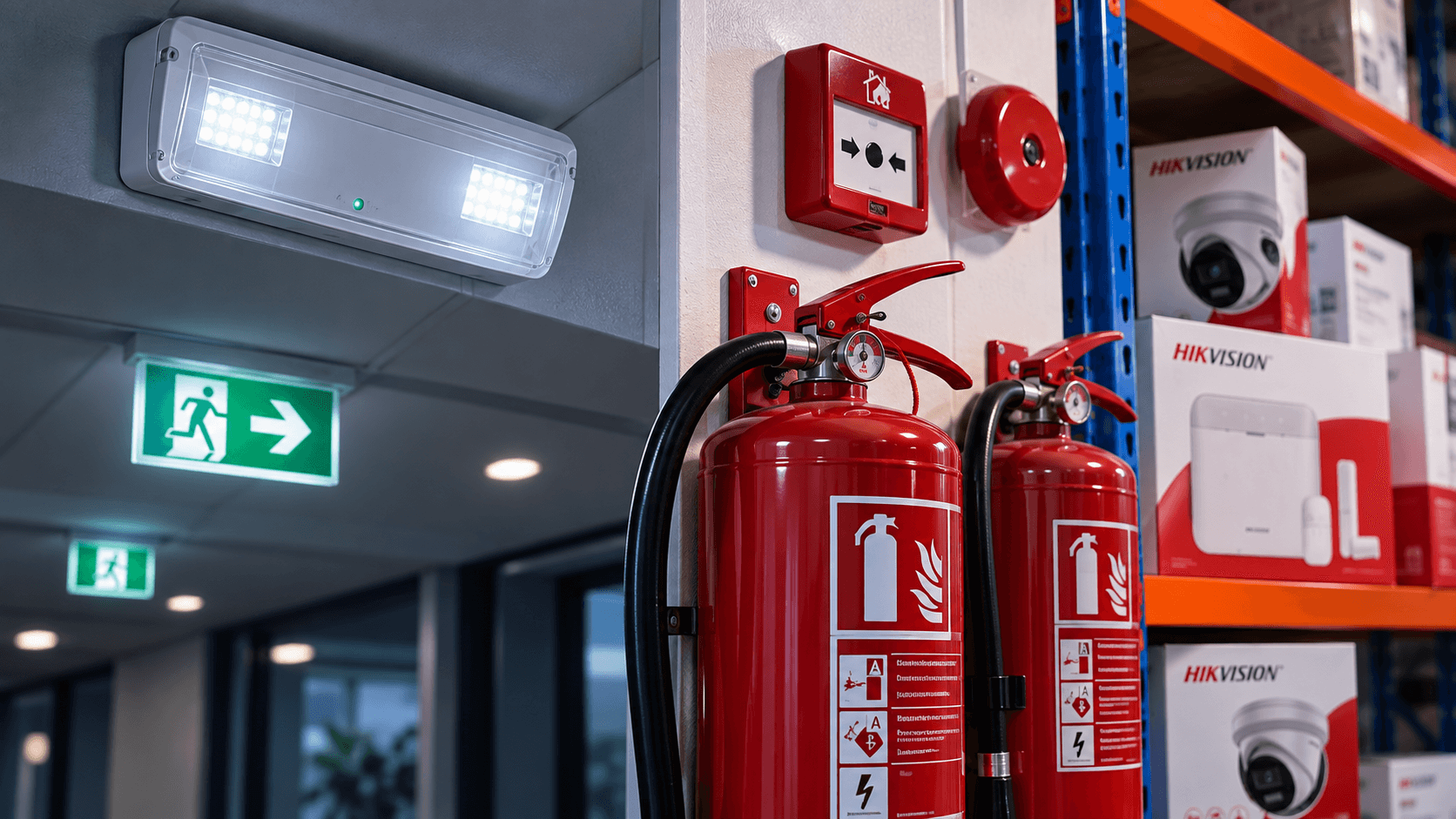
Fire safety is one of those responsibilities that can easily fade into the background of a busy working day. Emergency lights sit quietly above doorways, fire extinguishers remain mounted on walls, and fire alarm systems are often only noticed when they activate.
But the presence of fire safety equipment does not automatically mean it is ready to perform when needed.
An emergency light with a failing battery, an extinguisher that has not been serviced or an obstructed escape route could make a significant difference during an emergency.
For businesses across Gibraltar, regular inspection, testing and maintenance are essential parts of keeping premises and the people inside them protected. At Fortify Security Systems, we believe fire safety should be treated as an ongoing responsibility, not simply something addressed when a business first opens.
Emergency Lighting: Helping People Find Their Way to Safety
During a fire or another emergency, normal lighting may fail. Smoke, unfamiliar surroundings and reduced visibility can make it difficult for occupants to identify the safest way out.
Emergency lighting is designed to provide illumination when the normal lighting supply fails, helping people navigate escape routes and reach safety. Depending on the premises, emergency lighting may be required in areas such as corridors, stairwells, changes of level, exit routes and other locations identified through the property's fire safety assessment.
For businesses operating in the evenings, premises with internal corridors or buildings with multiple floors, dependable emergency lighting is particularly important.
The purpose is straightforward: to help occupants find their way out safely when normal lighting is no longer available.
Why Emergency Lighting Needs Regular Testing
An emergency light may appear perfectly normal from the outside while its internal battery is no longer capable of supporting the required operating duration. Because emergency lighting is rarely called upon during normal business operations, faults can remain unnoticed for extended periods. Regular testing helps identify issues before an emergency occurs.
A suitable inspection and maintenance programme should consider the condition and operation of the fittings, battery performance, charging arrangements, escape-route coverage and any faults or damage.
Testing should also establish whether the system continues operating for its required duration, with the appropriate procedures and intervals determined by the applicable standards, equipment and premises requirements. Any defects should be documented and addressed promptly.
An emergency light that illuminates briefly is not necessarily an emergency light that will perform for the full duration required.
Fire Extinguishers: Installed Does Not Mean Maintained
Fire extinguishers are another familiar feature of commercial premises. They are commonly found near exits, in corridors, kitchens, offices, workshops and other locations where appropriate fire-fighting equipment has been identified as necessary.
However, simply having an extinguisher mounted on a wall does not guarantee that it remains suitable or ready for use. Over time, extinguishers can suffer from pressure loss, corrosion, accidental damage, deteriorating components or other issues that may affect their operation.
An extinguisher may also have been used without anyone reporting it, moved from its designated location or obstructed by furniture and stored goods. These are some of the reasons why routine checks and professional servicing matter.
What Does Fire Extinguisher Maintenance Involve?
Fire extinguisher maintenance should be carried out by a suitably competent person in accordance with the relevant requirements and the manufacturer's instructions.
Depending on the extinguisher type and its condition, servicing may include checking:
- The general condition of the extinguisher, including signs of damage or corrosion.
- Pressure indicators, where fitted, and other indicators of serviceability.
- The operating mechanism, safety pin, tamper seal, hose and discharge components.
- The extinguisher's identification, instructions and service history.
- Whether the unit remains correctly positioned, accessible and appropriate for the location.
Different extinguisher types have different maintenance and extended-service requirements. Some may require additional procedures, replacement or withdrawal from service at specified intervals or when defects are identified. A competent service provider should identify these requirements and advise on any corrective action needed. Importantly, fire extinguishers should not be assumed to be serviceable simply because the pressure gauge appears to be in the green zone.
Choosing the Right Extinguisher for the Environment
Not every fire extinguisher is suitable for every type of fire. A commercial kitchen, an office, a workshop and an electrical equipment room can present different fire risks. The selection and positioning of extinguishers should reflect the hazards present, the layout of the premises and the findings of an appropriate fire risk assessment.
Using an unsuitable extinguisher can be ineffective and may create additional danger.
For this reason, fire protection should be considered as part of the overall safety arrangements for the property rather than simply purchasing a number of extinguishers and distributing them around the building.
Staff should also understand the limitations of portable extinguishers. They are intended for appropriate early-stage fires, where it is safe to use them, and must never take priority over raising the alarm and evacuating.
The Importance of Keeping Escape Routes Clear
Even a well-maintained emergency lighting system cannot compensate for a blocked escape route. As businesses grow and layouts change, corridors and exits can gradually become obstructed by stock, deliveries, furniture or equipment. Exit doors may also become difficult to operate, while emergency signs can become obscured following refurbishment or changes to the premises. Regular fire safety checks should therefore consider the complete escape route, not just the equipment installed along it. Emergency lighting, exit signage, fire doors and escape routes all need to work together to support a safe evacuation.
Fire Safety Changes as Your Business Changes
A business rarely stays exactly the same from the day it opens. A retail shop may introduce additional stock storage. A restaurant might install new kitchen equipment. An office may be divided into smaller rooms, or a commercial unit may be refurbished for a completely different purpose. These changes can affect fire risks, escape arrangements and the suitability of existing fire safety equipment. An emergency lighting installation that was appropriate for the original layout may need to be reviewed following significant alterations. Similarly, the type, quantity and positioning of fire extinguishers may need reconsideration when the use of a premises changes. This is why fire risk assessments and periodic reviews play an important role in ensuring fire safety arrangements continue to reflect how a property is actually used.
Maintenance Records Matter
A professional maintenance programme is not just about carrying out tests and inspections. Keeping accurate records helps businesses understand the condition of their equipment, identify recurring faults and demonstrate that maintenance activities have been undertaken. Records may include inspection dates, test results, servicing details, identified defects, corrective actions and the next scheduled maintenance activities. For business owners and property managers responsible for multiple units or buildings, a structured maintenance schedule can make fire safety considerably easier to manage. Rather than relying on memory or waiting for something to fail, equipment can be inspected and serviced at appropriate intervals.
Bringing Fire Safety and Security Together
Fire protection and physical security are often treated as separate services, but both are important parts of protecting a property. A business may have CCTV and an intruder alarm protecting it overnight, while fire detection, emergency lighting and extinguishers help protect the people using the building. At Fortify Security Systems, our wider approach to property protection includes CCTV, intruder alarms, access control, fire safety solutions and ongoing maintenance. We understand that business owners want dependable systems, clear advice and a straightforward way to manage the equipment protecting their premises. Whether you are fitting out a new commercial unit, reviewing an existing installation or arranging ongoing maintenance, fire safety should form part of the wider conversation.
Don't Wait Until an Emergency to Discover a Problem
Fire safety equipment is installed for situations we all hope never happen. That makes it particularly important to ensure it remains ready for use. Emergency lighting needs to provide dependable illumination when normal lighting fails. Fire extinguishers need to remain suitable, accessible and serviceable. Escape routes need to remain clear. And fire safety arrangements need to keep pace with changes to the premises. The time to discover a fault is during a planned inspection, not during an emergency.
Fire Safety Solutions from Fortify Security Systems
Fortify Security Systems supports Gibraltar businesses with fire and life-safety solutions, alongside our wider security installation and maintenance services. If your premises require a review of their emergency lighting, fire extinguishers or wider fire safety arrangements, contact our team to discuss your requirements and the appropriate inspection, servicing or installation options. Protecting your business is about more than preventing intrusion. It is also about helping to keep your employees, customers and visitors safe.